Alfred Stoecklein
In Cold BloodAlfred Stoecklein is the only employee who lives at River Valley Farm. His work and nearby home place him close to the Clutter household, but the aftermath of the killings turns that familiarity into unease: he helps clean the house, explains why he and his family heard nothing, and says they will move away.
Work and Home at River Valley Farm
Stoecklein lives with his wife and three children in a house less than a hundred yards from the main house. Their proximity makes the family’s failure to hear what happened there a natural question. When Mr. Clutter finds him working in the corral, Stoecklein explains that a baby is sick and that he and his wife have been awake much of the night; he is considering taking the child to a doctor. Mr. Clutter responds sympathetically, tells him to take the morning off, and offers help.
This exchange establishes a practical, everyday connection between employer and employee before the farm becomes a crime scene. Stoecklein is not a distant observer: he lives on the property and works within its daily routines. Yet the Clutters have no other neighbors within half a mile, making his household’s silence during the violence especially conspicuous afterward.
Helping Clean the House
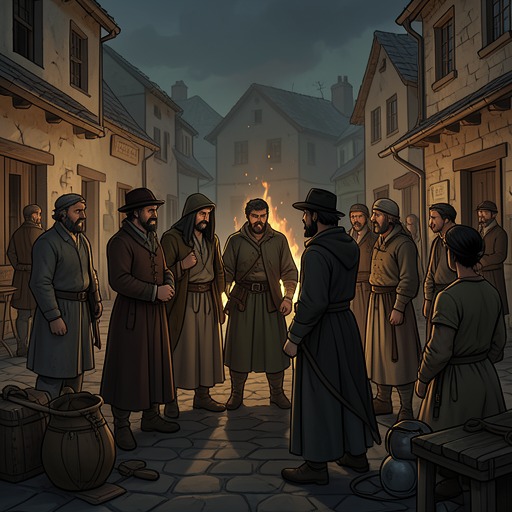
On November 16, 1959, Stoecklein waits at the house to admit four of Mr. Clutter’s friends, who have come to clean rooms in which four members of the family were killed. He assists them by fetching hot water and helping with the work. The cleaning proceeds from the basement to the bedrooms upstairs, and the party sets aside soiled furnishings and household items to be burned.
At the end of the day, Stoecklein drives the pickup carrying the collected items into the farm’s north field. There, the men unload them and make a pile; Stoecklein spreads kerosene over it and lights it. His role is concrete and necessary: he helps transform the rooms from the site of the killings into a place the household can no longer simply resume living in.
Explanation and Decision to Leave
While helping, Stoecklein objects to the public’s speculation about why he and his wife heard nothing. He points to two conditions: a west wind would have carried sound away from their house, and a large milo barn stood between it and the Clutter home, where it could have muffled noise. These are his explanations, not a claim that he witnessed what happened.
He also reasons that whoever committed the killings must have known the household would not hear the shots; otherwise, he argues, firing a shotgun four times in the night would have been too risky. The inference shows him trying to make sense of how the crime could occur so near his family without their awareness. His conclusion is personal as well as practical: he says he and his wife have spent their last night on the property and intend to move to a house beside the highway. The account does not establish whether or when they actually move.